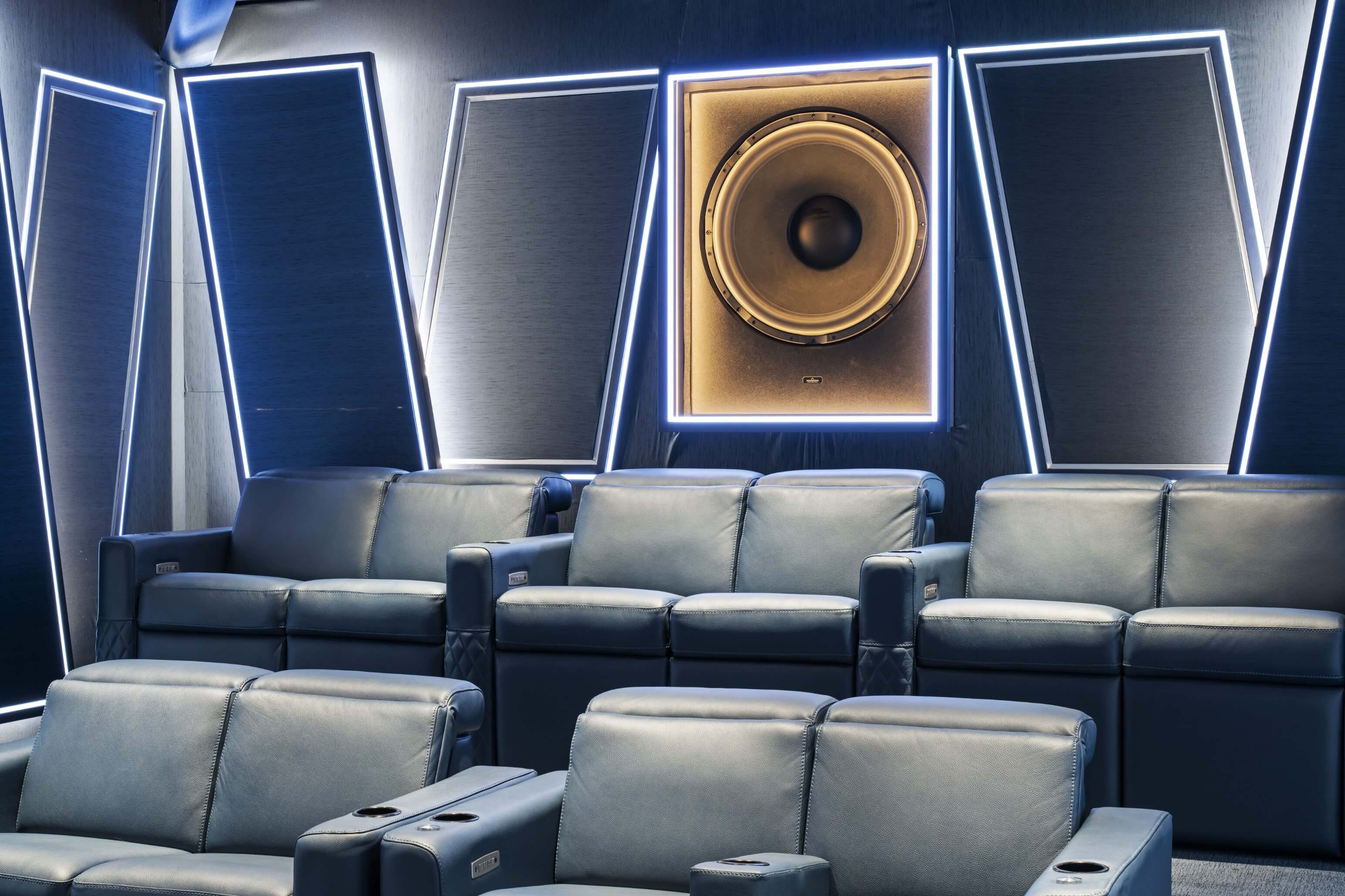
Park City, Utah, has a high concentration of private golf clubs but a short five-month season, making in-home golf simulators popular for those who want to keep their game sharp during the offseason, not to mention the perfect après-ski activity. In this home, HTA Certified home technology integration firm Nerve Park City transformed a former garage into one of the most technically ambitious residential entertainment spaces in the United States. Recognized with multiple project honors from both CE Pro and Technology Designer, this retrofit combines a reference-level immersive cinema with a professional multisport simulator. At the center of the project: a bold ASCENDO 11.5.6 immersive audio system built for uncompromising dynamic performance.
ASCENDO Home Theater Speakers in an 11.5.6 Immersive Configuration
This installation features a full ASCENDO immersive architecture:
- 11 main channels
- 5 subwoofer channels
- 6 overhead height channels
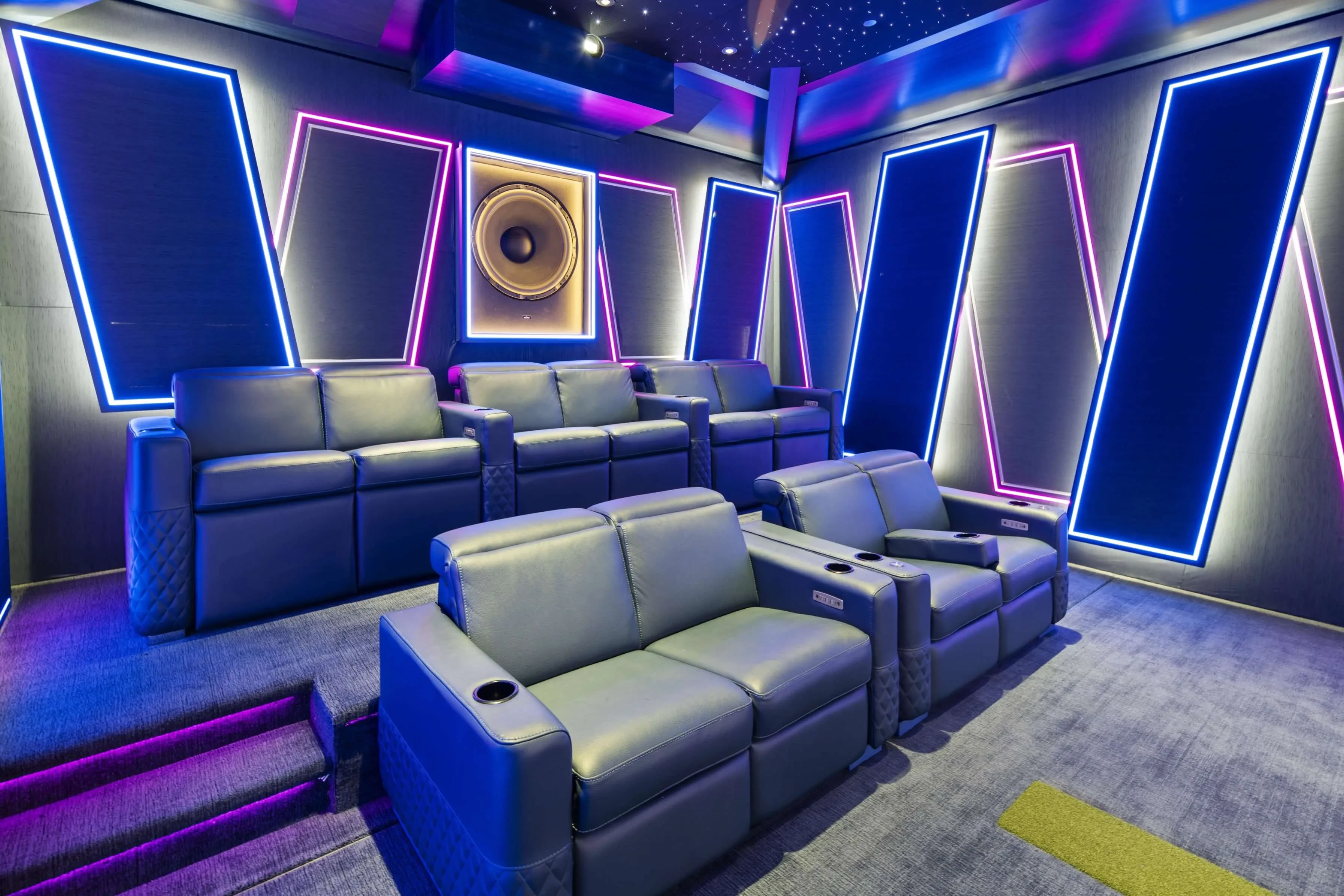
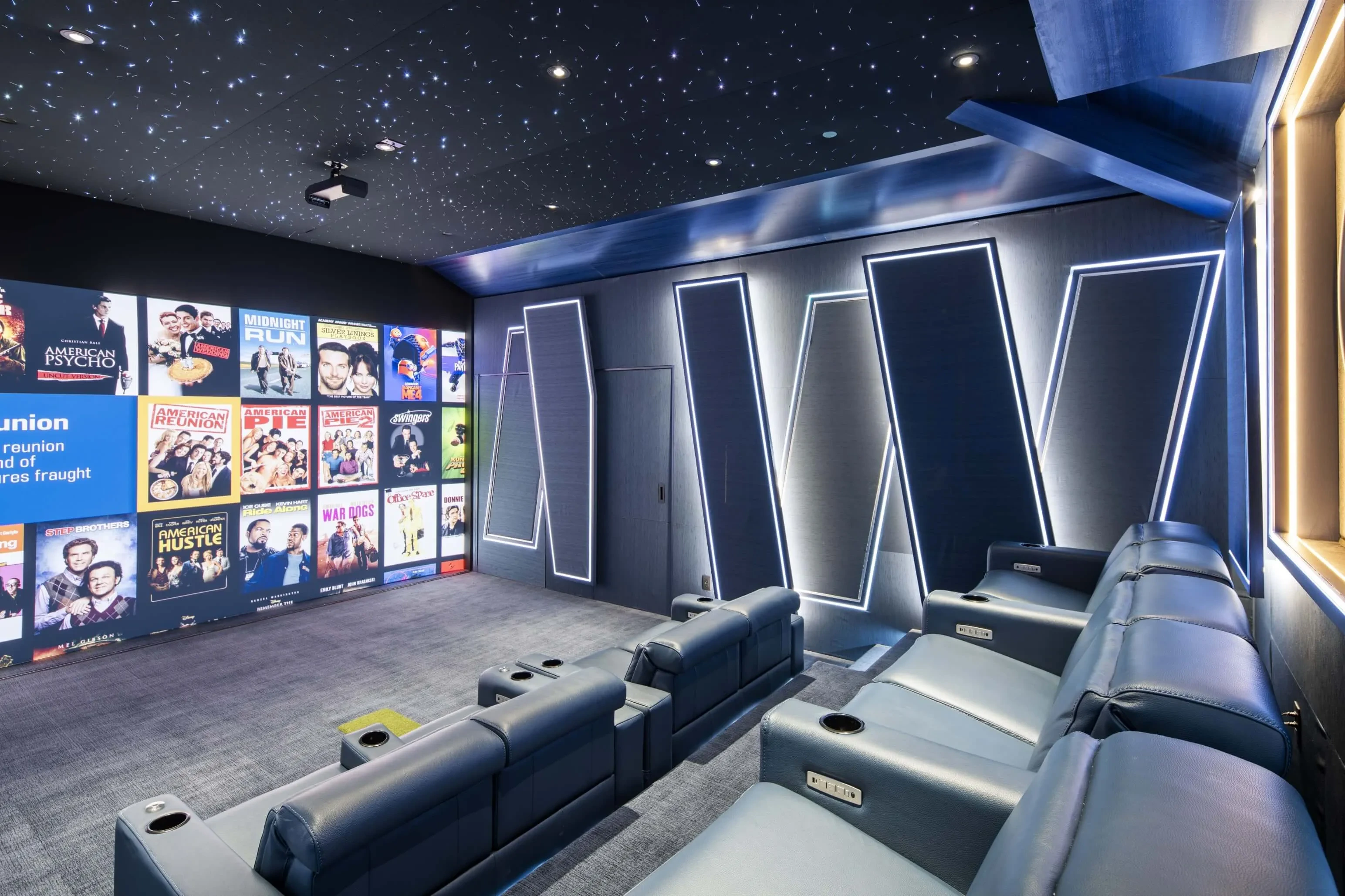
The front stage incorporates ASCENDO’s THE15 BE PRO PASSIVE speakers with beryllium compression drivers, engineered for extremely high efficiency and dynamic headroom. Unlike traditional dome tweeters, compression drivers maintain clarity and control at reference playback levels. Surround and height channels feature 10-inch ASCENDO loudspeakers (on-wall models hidden behind the parallelogram acoustic panels on the wall and THE10 wedges for ceiling channels), ensuring seamless object-based imaging throughout the room, courtesy of Trinnov's Altitude 32 processor. This system is designed not merely for loudness, but for scale, recreating the spatial realism of commercial cinema inside this family home.
How the ASCENDO 32-Inch Infrasub Changes Residential Cinema
Low-frequency performance, including infrasonic bass frequencies, contributes to the emotional impact of film and immersive sports simulation.
This room deploys:
- Four ASCENDO dual 18-inch subwoofers in front and rear corners
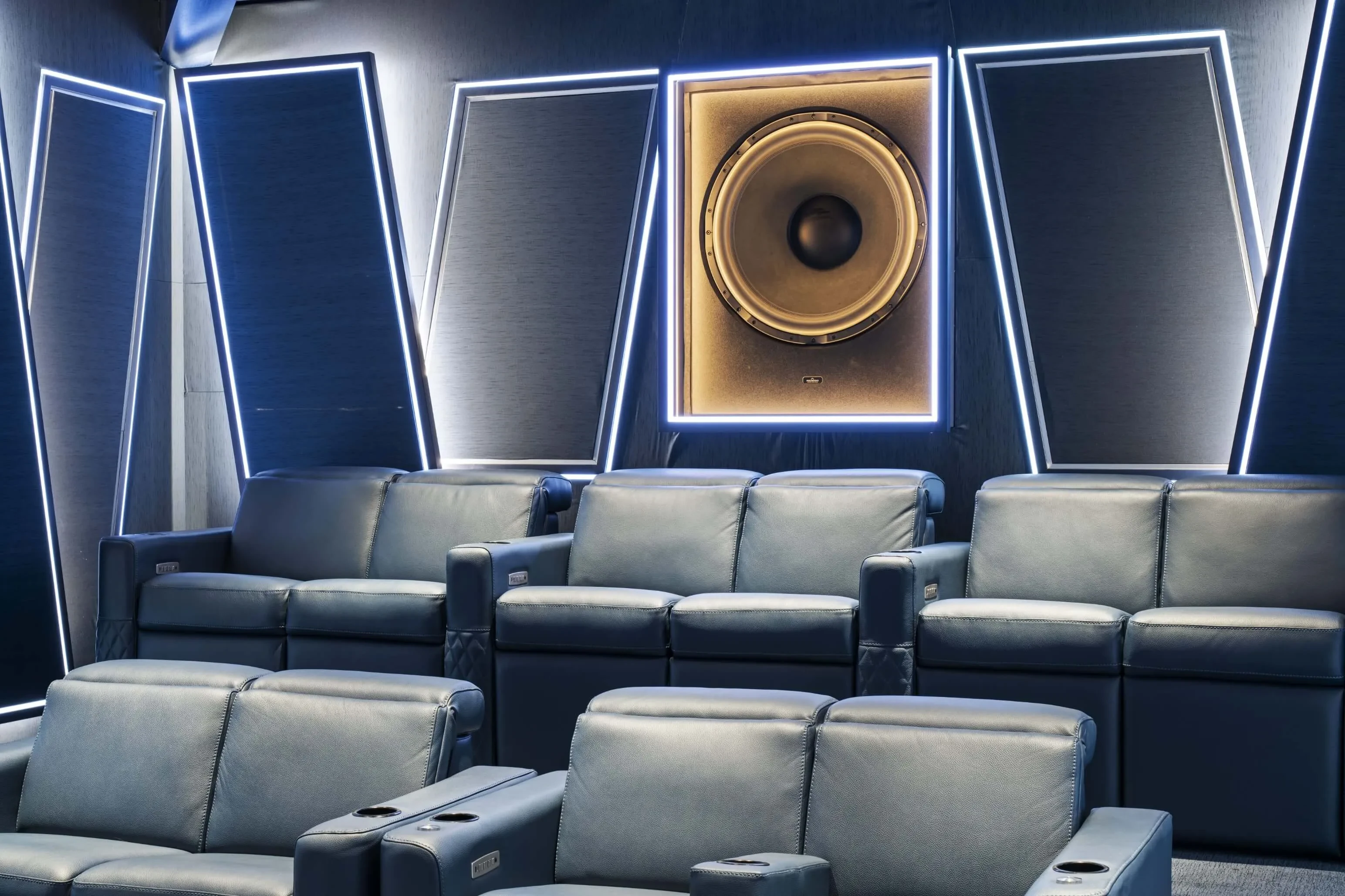
- One 32-inch ASCENDO infrasonic subwoofer
Most residential theaters rely on multiple 12- or 15-inch subwoofers to approximate impact. Large-format drivers like ASCENDO’s 32-inch model move substantially more air per stroke, enabling the room to pressurize evenly at reference level without distortion.
In a dual-use cinema and simulator environment where real golf balls are driven into a retractable impact screen, tactile, controlled low-frequency response is essential. The ASCENDO system provides both visceral impact and precision. When it’s time to watch a movie, the 32-inch infrasub delivers bass energy the audience can feel, while the ASCENDO 18-inchers around the room pick up where the infrasub leaves off, handling the more ‘standard’ low frequencies with finesse.
Built to Meet RP22 Performance Standards
This project was engineered in alignment with the performance objectives outlined in RP22, the immersive audio recommended practice developed by CEDIA (with input from ASCENDO’s own Geoffrey Heinzel) and in collaboration with the Consumer Technology Association. RP22 establishes measurable performance targets for residential immersive audio systems, including:
- Frequency response
- Maximum sound pressure level (SPL) capability
- Low-frequency extension
- Dynamic range
- Spatial coverage consistency
Rather than designing the room around subjective listening impressions alone, the system architecture was selected to meet defined output and coverage requirements consistent with reference-level cinema performance.
Large-format ASCENDO compression drivers provide the headroom required to achieve RP22 peak SPL targets without distortion. The multi-subwoofer deployment enables low-frequency extension and room pressurization aligned with high-performance residential benchmarks.
In a combined cinema and simulator environment, where dynamic impact is essential, RP22-aligned design ensures the room performs predictably and repeatably.
“This standards-driven performance environment is the most expensive and complicated combination room we have ever executed,” says Todd Astill of Nerve.
The extensive expertise of Nerve’s in-house team, early system design inputs from Heinzel and ASCENDO US distributor Todd Sutherland, Sutherland AV Marketing, acoustic design by Gerry Lemay of Quest Acoustical Interiors and the Home Acoustics Alliance, and system calibration from the renowned Adam Pelz helped achieve the RP22 standard.
Acoustic modeling and placement were engineered to manage extreme output while preserving clarity and isolation within a retrofit structure that included roof pitches, exposed beams, and mechanical constraints.
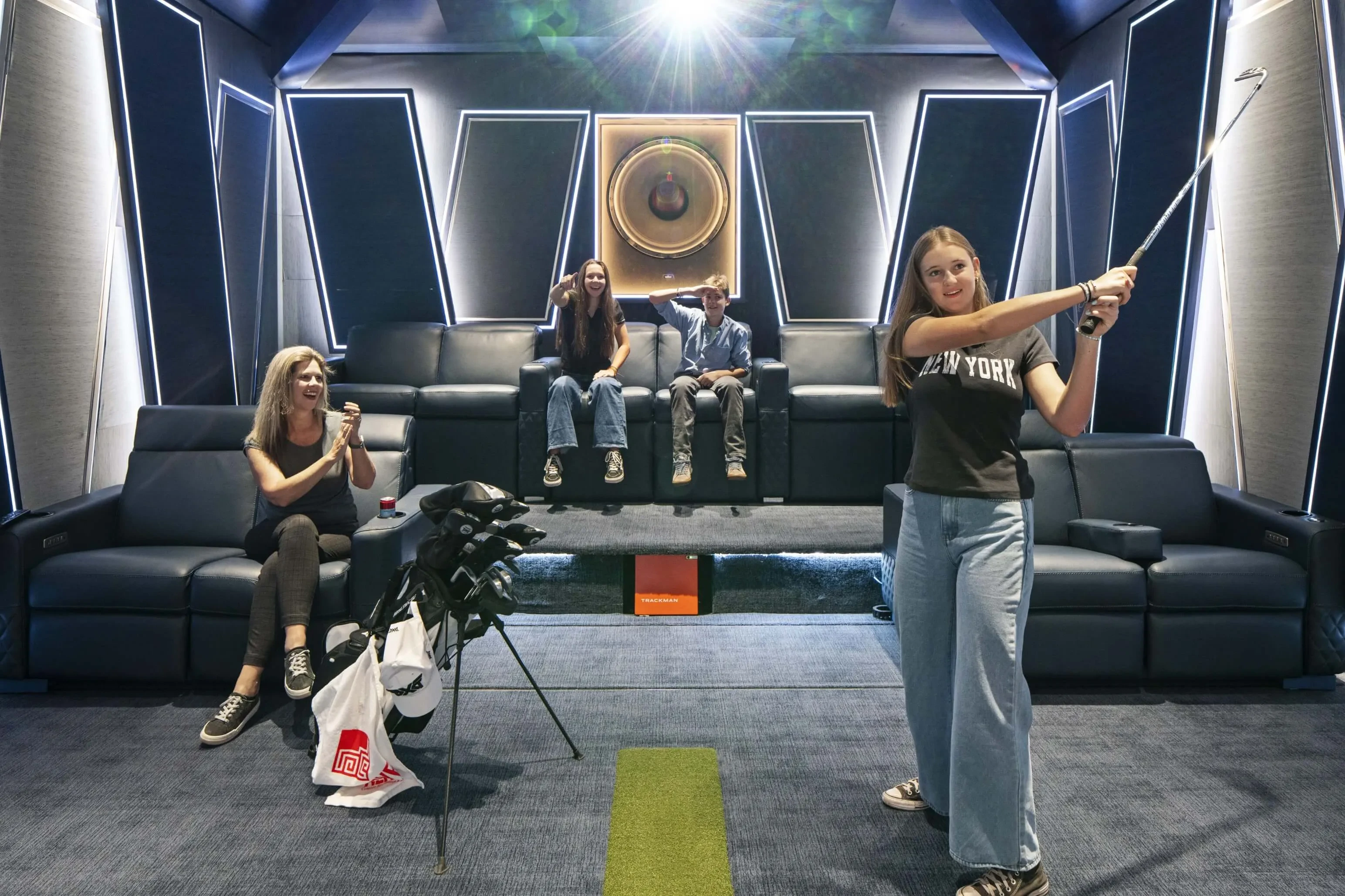
Engineering a Combined Cinema and Multisport Simulator
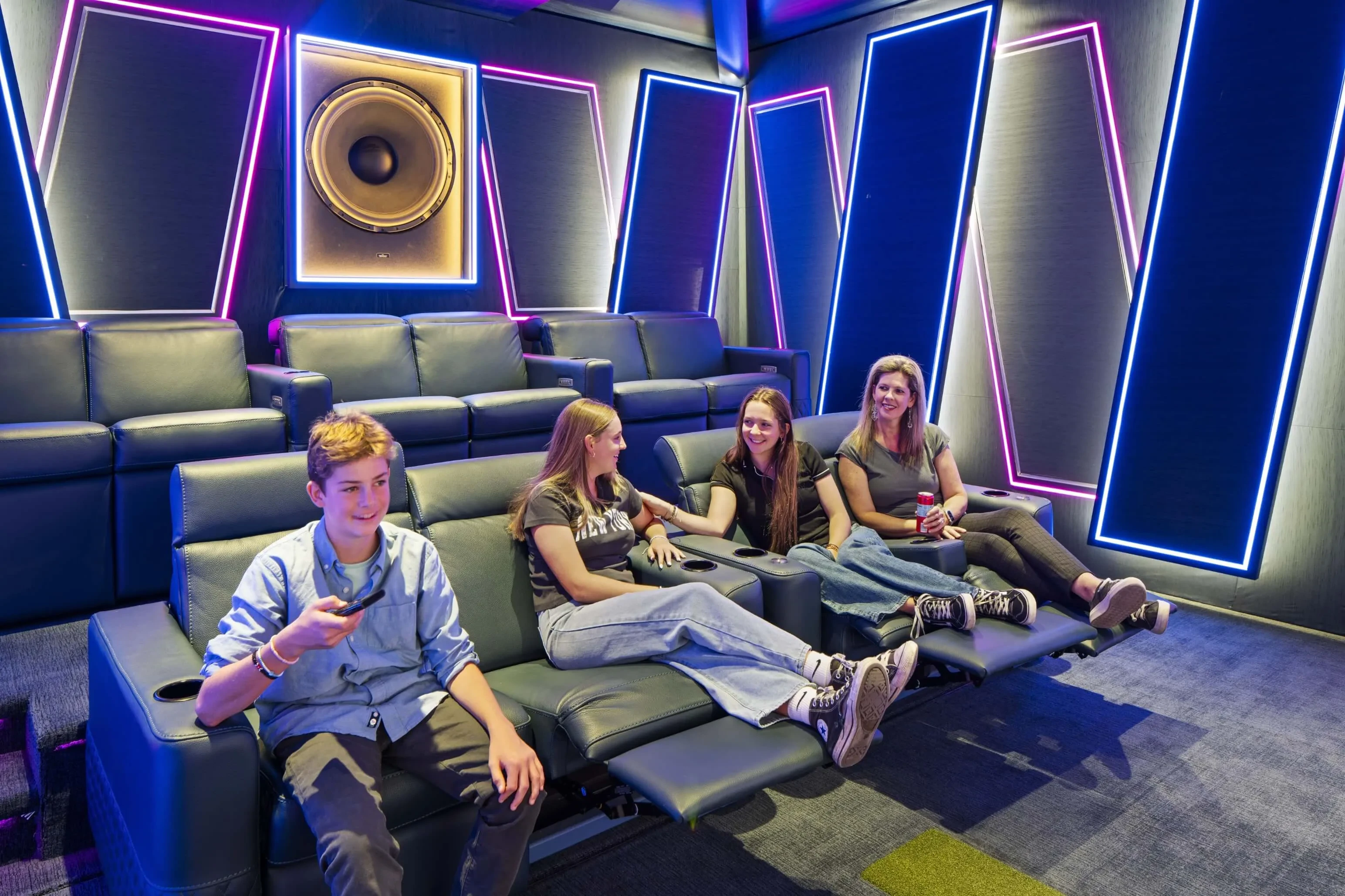
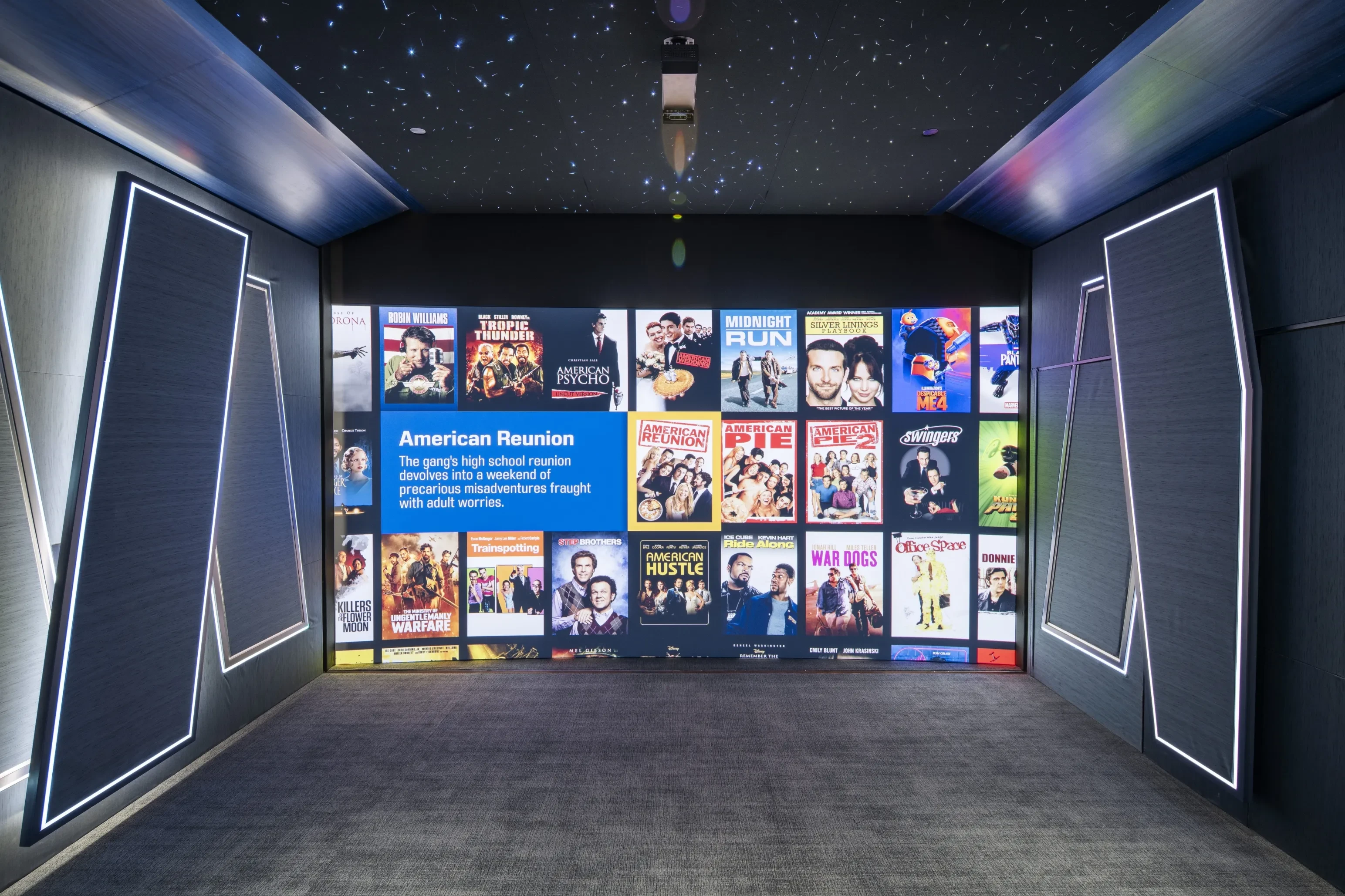
The room functions as both a high-performance movie theater and an active sports simulation space. A retractable golf impact screen lowers in front of a fixed curved cinema screen, allowing real golf play without compromising projection geometry. The front row of seating slides outward to create safe swing clearance. Sightlines are preserved with a 12-inch riser and elevated rear seating. Projection is handled by a Christie Griffyn 4K35 RGB laser projection that supports a dual-screen configuration for cinematic and simulator content, which maintains brightness across the massive curved surface.
Designed for Performance and Aesthetic Integration
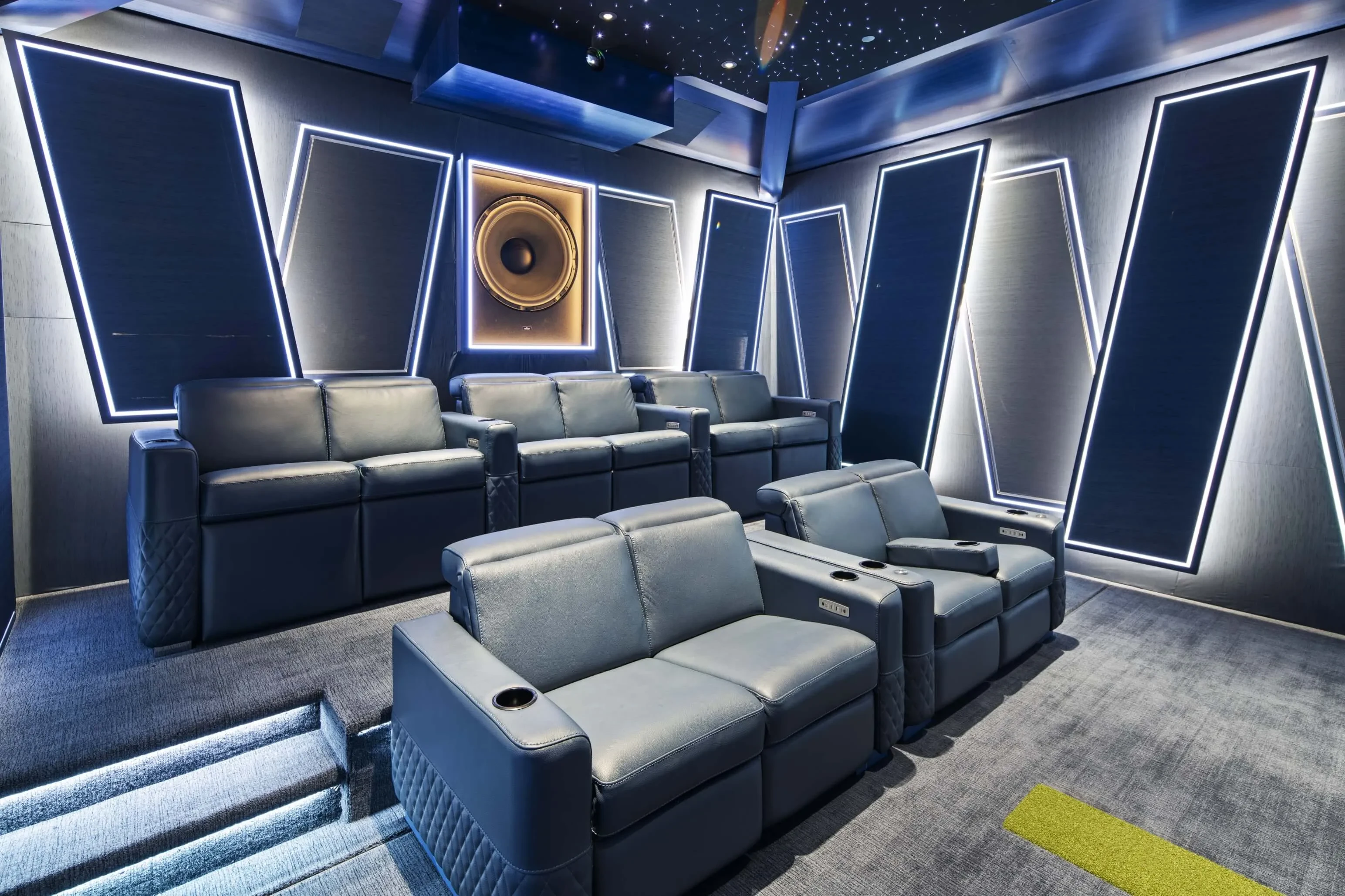
Home theater interior designer Lisa Slayman ensured that the room avoided the traditional “black box” aesthetic. Custom blue-stained veneer wraps architectural elements, geometric motifs add visual rhythm, and projection equipment is concealed within a purpose-built hush enclosure.
Originally planned to be hidden, the ASCENDO 32-inch subwoofer remains visible at the client’s request, a sculptural statement that reflects the system’s performance intent. Lisa framed the subwoofer with eye-catching LED lighting to draw attention to its size and sublime presence in the room.
Why ASCENDO Was Critical
This room required a loudspeaker platform capable of:
- Reference-level playback without compression
- Infrasonic extension below conventional residential limits
- Even room pressurization across a large cubic volume
- Seamless object-based immersive imaging
- Linearity
- Consistent dynamics for both film and sports simulation
ASCENDO’s high-efficiency speakers and large-format subwoofers made that performance possible.
Project Credits & Technical Summary
Integrator: Nerve Park City
Application: Combined cinema and multisport simulator
Location: Park City
System: ASCENDO 11.5.6 immersive audio system
Front Stage: 3 ASCENDO THE15 BE PRO PASSIVE ON WALL
Subwoofers: 4 ASCENDO THE18-2 SUB PRO PASSIVE and 1 ASCENDO THE32 Infrasonic Subwoofer
Surrounds: 8 THE10 PRO PASSIVE ON WALL
Heights Channel: 6 THE10 PASSIVE WEDGE
Simulator: Nerve Proprietary Golf Simulator with custom-made fixed cinema screen curved to provide deflection space for the golf screen and efficient perimeter space for subwoofers.
Projector: Christie Griffyn
Acoustics: Gerry Lemay, Home Acoustics Alliance and Quest Acoustical Interiors
Interior Design: Lisa Slayman, Slayman Cinema
Sound Isolation: Ted White, The Soundproofing Company
ASCENDO US Distributor: Sutherland AV Marketing
Recognition: CE Pro Home of the Year & Technology Designer Performance Home Award
Frequently Asked Questions About ASCENDO Home Theater Systems
What makes ASCENDO different from traditional home theater speakers? ASCENDO systems use high-efficiency compression driver technology and large-format subwoofers designed for the unique needs of home cinemas, not derived from pro applications, enabling linearity, continuous power, and reference-level playback without dynamic compression.
Why would a residential theater use a 32-inch subwoofer? A 32-inch subwoofer moves significantly more air than smaller drivers, allowing large rooms to pressurize evenly and reproduce infrasonic frequencies without distortion. The ASCENDO infrasub line includes a 24-inch, 32-inch, 80-inch, and 100-inch model.
Are compression drivers too aggressive for home theaters?
When properly engineered and calibrated, compression drivers provide greater headroom, lower distortion at high SPL, and improved clarity at both low and high playback levels.
Can immersive audio systems work in combination with game rooms? Yes. High-output systems like ASCENDO maintain dynamic control whether reproducing film soundtracks or simulator impact effects, making them ideal for multifunction luxury spaces.

- ASCENDO Home Theater Speakers in an 11.5.6 Immersive Configuration
- How the ASCENDO 32-Inch Infrasub Changes Residential Cinema
- Built to Meet RP22 Performance Standards
- Engineering a Combined Cinema and Multisport Simulator
- Designed for Performance and Aesthetic Integration
- Why ASCENDO Was Critical
- Project Credits & Technical Summary
- Frequently Asked Questions About ASCENDO Home Theater Systems